Justice Tarot Card Meaning
Quick meaning
Justice traditionally focuses on fairness, accountability and careful choices. Its themes can offer a way to reflect on how you understand your own part in an exchange. In love or friendship, the card may draw attention to considering different views honestly, with care for the effects of a decision and the meaning of taking responsibility for it.
At a glance
| Arcana | Major Arcana |
|---|---|
| Number | XI |
| Upright keywords | fairness, honesty, accountability, balance, careful choices |
| Reversed keywords | unfairness, avoided responsibility, bias, unclear judgment |
The image
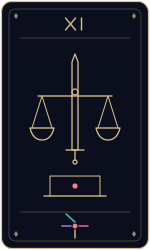
A seated figure holds a raised sword and balanced scales between two pillars. A curtain hangs behind the seat. The sword is held upright, and the scales hang from the other hand. The seated figure remains between the pillars. Behind the seat, the curtain provides a backdrop to these objects and their clear positions.
Upright meaning
Fairness is a traditional upright theme of Justice. Honesty can make the details of a choice easier to consider. Accountability includes recognizing the part you have taken in an experience. The card can be explored through ordinary decisions between people. A careful response may involve making room for information that differs from your first impression. Balance concerns how the exchange is understood, not a demand that every gesture look identical. The meaning invites a considered view of participation. A personal decision can be clearer when its purpose and its effect on the shared experience are both noticed.
Reversed meaning
Reversed Justice traditionally brings bias and avoided responsibility into question. Unfairness may appear when only a single view receives attention. Unclear judgment can make a response feel more certain than the available detail supports. Try reviewing the part you know directly before deciding what the rest of the exchange means. This review is not a bad omen. The card can be a prompt to reconsider a conclusion with honesty. A revised understanding can include something you had overlooked. Responsibility may begin with acknowledging that your first account was only part of the experience.
In love and connection
Being treated fairly can matter as much as reaching an agreement. Justice's themes may be reflected in the room given to each person's account. An honest exchange includes your own wishes without treating them as the only relevant detail. A disagreement can feel hard when someone assumes their view explains everything. Try describing your part in the situation before inviting the other person to add theirs. The conversation can then contain more than a contest between conclusions. Care may be expressed through the willingness to understand how a choice felt on both sides.
A gentle tip
Try separating what you directly noticed from what you assumed before returning to a choice that affects someone else.
A question to reflect on
What does taking responsibility for your part make clearer, and which other perspective deserves room before you settle on an answer?